Blog
Nepal Floods 2026: What Happened, Causes, Damage, and the Road to Recover
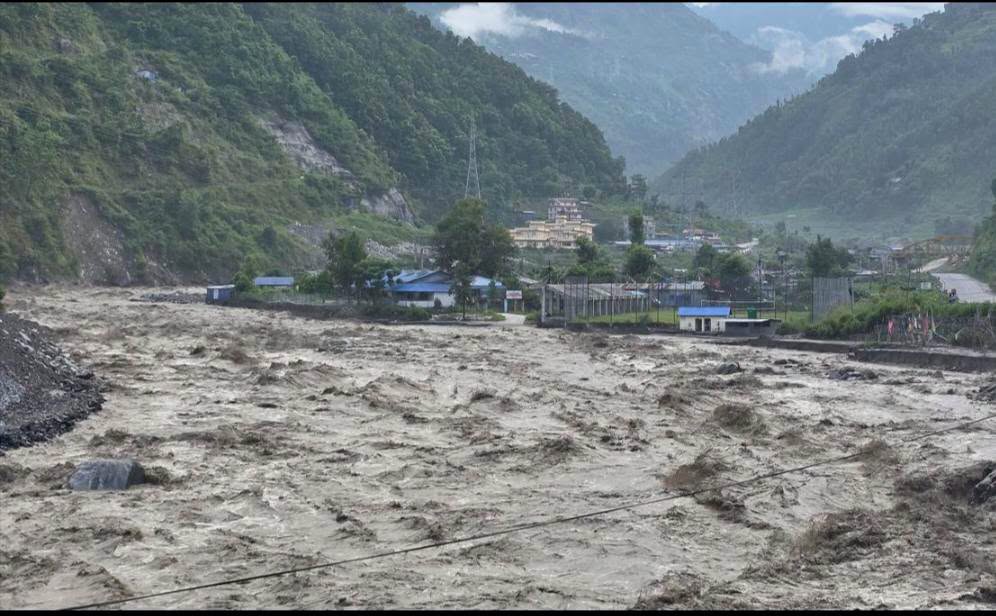
Nepal has experienced many natural disasters, but the devastating floods of August 2026 have left a particularly painful mark on the country. On August 26, a sudden and extremely powerful flood swept through northern and central Nepal, devastating communities along the Bhote Koshi and Trishuli river corridors.
The worst destruction was reported in Rasuwa District, close to the Nepal–China border. The flood carried enormous amounts of water, mud, rocks, ice, and debris downstream, destroying homes, roads, bridges, hydropower infrastructure, businesses, and other essential facilities.
The disaster has also affected travelers and foreign nationals who were in the border region. Search-and-rescue teams continue to work in difficult mountainous terrain, while families across Nepal and abroad wait for information about missing relatives.
The disaster began in the Himalayan region near the Nepal–China border. Initial assessments indicate that a sudden surge of water entered the Bhote Koshi River from the Tibet side, possibly following an ice avalanche and temporary blockage of the Lhende River.
The resulting flood moved rapidly downstream through the steep mountain valleys.
Unlike a conventional river flood that may develop over several hours or days, this event behaved more like a sudden wall of water and debris. Communities close to the river had very little time to respond.
The Bhote Koshi eventually connects with the Trishuli River system, meaning the effects extended well beyond Rasuwa. Flood-related impacts were reported in parts of Nuwakot, Dhading, Chitwan, Gorkha and Tanahun as the river system carried the destructive flow downstream.
Several factors combined to make the 2026 disaster exceptionally dangerous.
The most significant factor appears to have been an ice-and-rock avalanche and associated temporary river blockage in the Himalayan region.
When water becomes trapped behind a natural blockage, a sudden release can produce an enormous downstream surge. In steep Himalayan valleys, that water can accelerate rapidly and carry rocks, trees, soil and other debris with it.
Nepal's northern landscape is dominated by steep mountains and narrow river valleys. Water released at high elevation can travel downstream extremely quickly.
This geography also makes evacuation and rescue operations difficult.
The disaster occurred during Nepal's monsoon season, when rivers and slopes are already under considerable hydrological stress.
Saturated ground can also increase the likelihood of landslides, while heavy rainfall can make rescue operations more dangerous.
Roads, bridges, hydropower plants and settlements are often concentrated along river corridors because these areas provide access, transportation routes and water resources.
That also means a major flood can damage multiple forms of infrastructure simultaneously.

Rasuwa was at the center of the disaster.
The Bhote Koshi corridor includes important settlements, roads, border facilities and infrastructure connecting Nepal with China. Timure and the Rasuwagadhi area suffered particularly severe destruction.
The flood also damaged the road network and bridges connecting communities along the river. Satellite-based assessments showed extensive destruction along the river corridor, including roads, bridges and hydropower facilities.
For local residents, the disaster was more than a transportation crisis. Homes and businesses disappeared within minutes, leaving many families without shelter, possessions or reliable access to food and communication.
One of the most serious consequences of the Nepal floods is the destruction of critical infrastructure.
Several bridges were washed away, while sections of highways and local roads were buried or destroyed by mud and debris.
Hydropower infrastructure was also badly affected. This is particularly important for Nepal because hydropower is one of the country's major sources of electricity and an important part of its economic future.
The destruction of roads and bridges also creates a second problem: even when rescue teams have the equipment and personnel needed to help, reaching isolated communities becomes much harder.
The human toll has been devastating.
As rescue and recovery operations continue, the number of confirmed deaths and missing people has changed rapidly. On August 29, Nepal Police figures reported by Nepal News said 669 bodies had been recovered in connection with the Rasuwa–Bhote Koshi flood. Thousands of people were still missing or unaccounted for.
Foreign nationals and tourists were also among those affected. Authorities reported that hundreds of foreign nationals had been rescued, while others remained out of communication.
These figures are expected to change as search teams reach areas that remain difficult to access.
Behind every number is a family waiting for news, a home that may no longer exist, or a community trying to understand how life changed in a matter of minutes.
Nepal's security forces, local authorities, medical teams and volunteers have been working to rescue survivors and recover victims.
Helicopters have played an important role where roads and bridges have been destroyed. However, bad weather, unstable slopes, debris, damaged infrastructure and continuing river hazards have made the operation extremely challenging.
Authorities have also been monitoring dangerous water bodies and potential secondary flood risks near the disaster zone. A temporary lake formed near the border following the glacial collapse, although the immediate risk associated with one of the lakes had diminished by August 29 as water began draining naturally.
The floods are likely to have a long-lasting economic impact.
The immediate damage includes destroyed homes, roads, bridges, businesses, border infrastructure and hydropower facilities. But the indirect costs could be even greater.
Trade through the Nepal–China border has been disrupted, transportation routes have been damaged, tourism activities have been affected, and thousands of families have lost their sources of income.
Nepal's Finance Ministry has estimated that reconstruction could require approximately US$4–5 billion, illustrating the enormous scale of the disaster.
Nepal's tourism industry has also been affected.
The Rasuwa and Langtang region is an important gateway to popular trekking destinations, while the Nepal–China border corridor is used by travelers and pilgrims.
The floods have damaged transportation infrastructure and created uncertainty for people planning travel to affected areas.
However, it is important to distinguish between affected areas and the entire country. Nepal remains a large country, and many popular destinations away from the disaster zone continue to operate.
Travelers should check current local conditions, road access, weather warnings and official notices before traveling to areas near affected rivers.
The 2026 floods highlight the growing importance of disaster preparedness in the Himalayan region.
Nepal needs stronger systems for:
The Himalayas are changing, and communities living downstream of glaciers and unstable mountain slopes face risks that can develop extremely quickly.
Scientists have increasingly warned that warming temperatures are changing high-mountain environments.
Glaciers are retreating, snow and ice conditions are changing, and unstable slopes can create new hazards. However, it would be premature to attribute every individual flood directly to climate change.
The precise chain of events behind the August 2026 disaster is still being investigated. Geological processes, glacial conditions, water accumulation and other factors may have interacted to produce the catastrophic flood.
What is clear is that Himalayan communities need better monitoring and warning systems as environmental conditions continue to change.
The immediate priority is saving lives, finding missing people and providing essential assistance to survivors.
But the recovery will take much longer.
Roads and bridges will need to be rebuilt. Families will need homes and livelihoods. Hydropower and communication infrastructure will require major repairs. Communities will also need psychological and social support after losing relatives, homes and businesses.
The 2026 Nepal floods are not simply a story about water. They are a story about people living in one of the world's most beautiful but geologically fragile environments.
For Nepal, the road ahead will involve both mourning and rebuilding.
The country has faced devastating earthquakes, floods, landslides and other disasters before. Once again, communities across Nepal are being asked to recover from an event that changed thousands of lives in a matter of minutes.
The hope now is that the lessons from the 2026 floods will lead to stronger early-warning systems, safer infrastructure and better preparation for the next Himalayan disaster.