Blog
Manaslu Circuit Trek – Frequently Asked Questions
The Manaslu Circuit Trek is a high-altitude trek around Mount Manaslu, the eighth-highest mountain in the world at 8,163 meters. The route passes through remote Himalayan villages, lush forests, Buddhist communities, and dramatic mountain landscapes before crossing the Larkya La Pass.
The Manaslu Circuit Trek is considered a moderate to challenging trek. Long walking days, increasing altitude, remote terrain, and the crossing of Larkya La Pass make it more demanding than many popular lower-altitude treks in Nepal.
The Manaslu Circuit Trek usually takes around 12 to 16 days, depending on the itinerary, acclimatization days, transportation, and starting point. A longer itinerary allows for a more comfortable pace and better altitude acclimatization.
The highest point of the Manaslu Circuit Trek is Larkya La Pass, at around 5,100 meters. Crossing the pass is the biggest physical challenge of the trek and requires proper acclimatization and preparation.
The Manaslu Circuit Trek generally starts in the lower Budhi Gandaki Valley, commonly around Machha Khola or nearby trailheads. The exact starting point can change depending on road conditions and the itinerary selected.
The Manaslu Circuit Trek usually ends at Dharapani, where the trail connects with the Annapurna region. From Dharapani, trekkers can continue by road toward Besisahar, Pokhara, or Kathmandu.
The Manaslu Circuit Trek can be completed by fit beginners, but it is not considered an easy beginner trek. The high altitude, long walking days, remote trails, and Larkya La Pass require good preparation and a sensible itinerary.
Previous trekking experience is helpful but not essential for the Manaslu Circuit Trek. Beginners who are physically fit and properly prepared can complete the trek with an experienced guide, appropriate acclimatization, and a suitable pace.
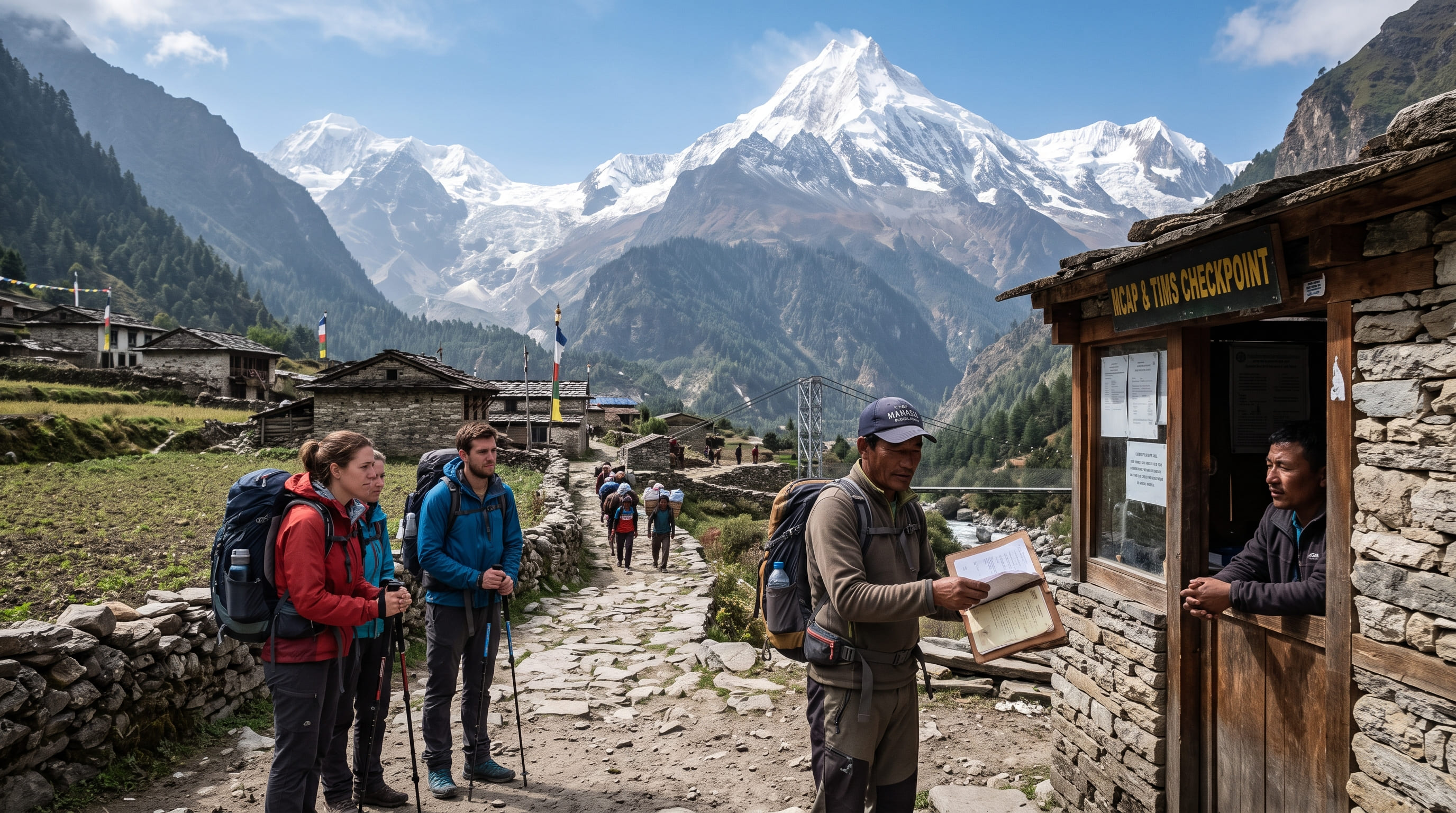
Yes, trekkers in the Manaslu Restricted Area must follow the current restricted-area trekking regulations, including the applicable requirement for authorized trekking arrangements and permits. It is important to confirm the latest rules before starting the trek because regulations can change.
Independent solo trekking is not permitted in the Manaslu Restricted Area under the current regulations. Trekkers should arrange the required permits and trekking support through a registered trekking agency.
The main permits for the Manaslu Circuit Trek are the Manaslu Restricted Area Permit, Manaslu Conservation Area Permit, and, depending on the route, the Annapurna Conservation Area Permit. Your trekking agency normally arranges the required permits before the trek.
The Manaslu Restricted Area Permit fee depends on the trekking season and the number of days spent inside the restricted area. September to November has a higher published rate than December to August, so trekkers should check the latest Department of Immigration rates before booking.
The Manaslu Circuit Trek generally costs around USD 1,300–2,000 or more per person, depending on the itinerary and services included. Permits, transportation, guide, porter, accommodation, meals, and group size all affect the final price.
The best seasons for the Manaslu Circuit Trek are spring from March to May and autumn from September to November. These seasons generally offer favorable trekking conditions, clearer mountain views, and more stable weather.
Yes, October is one of the best months for the Manaslu Circuit Trek. The monsoon has usually ended, mountain visibility is often excellent, and daytime trekking conditions are generally comfortable.
Yes, November is an excellent month for the Manaslu Circuit Trek, especially during the first half of the month. Temperatures become colder as winter approaches, so warm clothing and suitable equipment are essential.
Yes, spring is one of the best seasons for the Manaslu Circuit Trek. March, April, and May offer pleasant trekking conditions, and lower sections of the trail can be especially beautiful when rhododendrons are blooming.
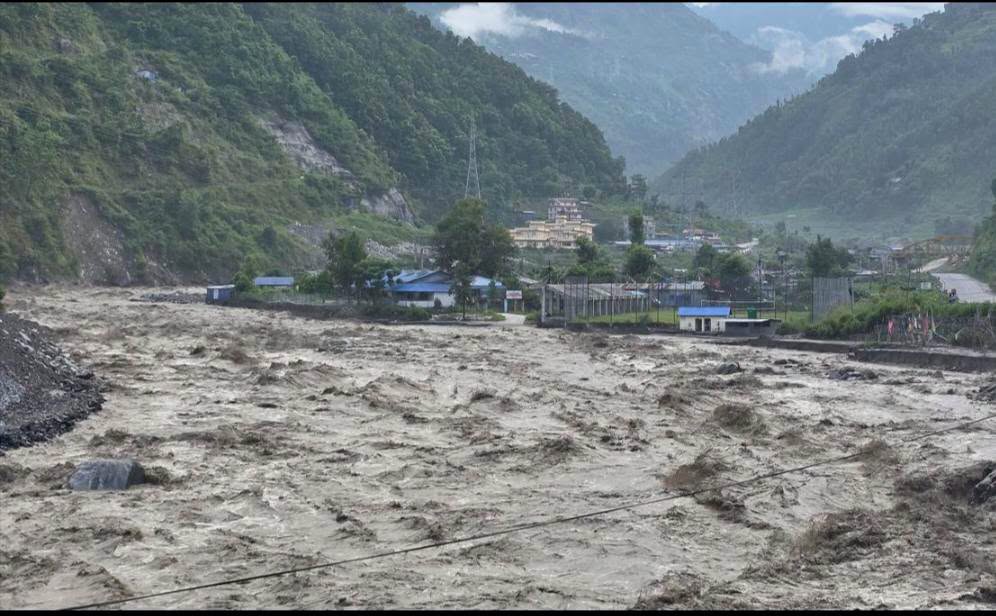
Yes, the Manaslu Circuit can be trekked during the monsoon, but June to August is generally less favorable. Heavy rainfall can cause slippery trails, landslides, cloudy mountain views, and difficult road conditions.
The Manaslu Circuit Trek is possible in winter but is significantly more challenging. Snow, freezing temperatures, icy trails, and difficult conditions around Larkya La Pass can make winter unsuitable for inexperienced trekkers.
Most Manaslu Circuit Trek days involve approximately 5 to 8 hours of walking. Walking time varies according to the itinerary, altitude, trail conditions, weather, and individual fitness.
The Manaslu Circuit Trek covers roughly 170 to 180 kilometers, depending on the itinerary and road sections used. The actual distance can vary because transportation and trail routes change over time.
Larkya La Pass is the highest point of the Manaslu Circuit Trek at approximately 5,100 meters. It connects the Manaslu region with the Marsyangdi Valley and is the most challenging section of the circuit.
Yes, crossing Larkya La Pass is challenging mainly because of the high altitude, long walking distance, cold weather, and possible snow. A slow pace, early start, proper acclimatization, and suitable clothing make the crossing more manageable.
The major attractions of the Manaslu Circuit Trek include Mount Manaslu, Larkya La Pass, Samagaun, Samdo, traditional mountain villages, Buddhist monasteries, glaciers, forests, and spectacular Himalayan scenery. The trek also offers a strong cultural experience.
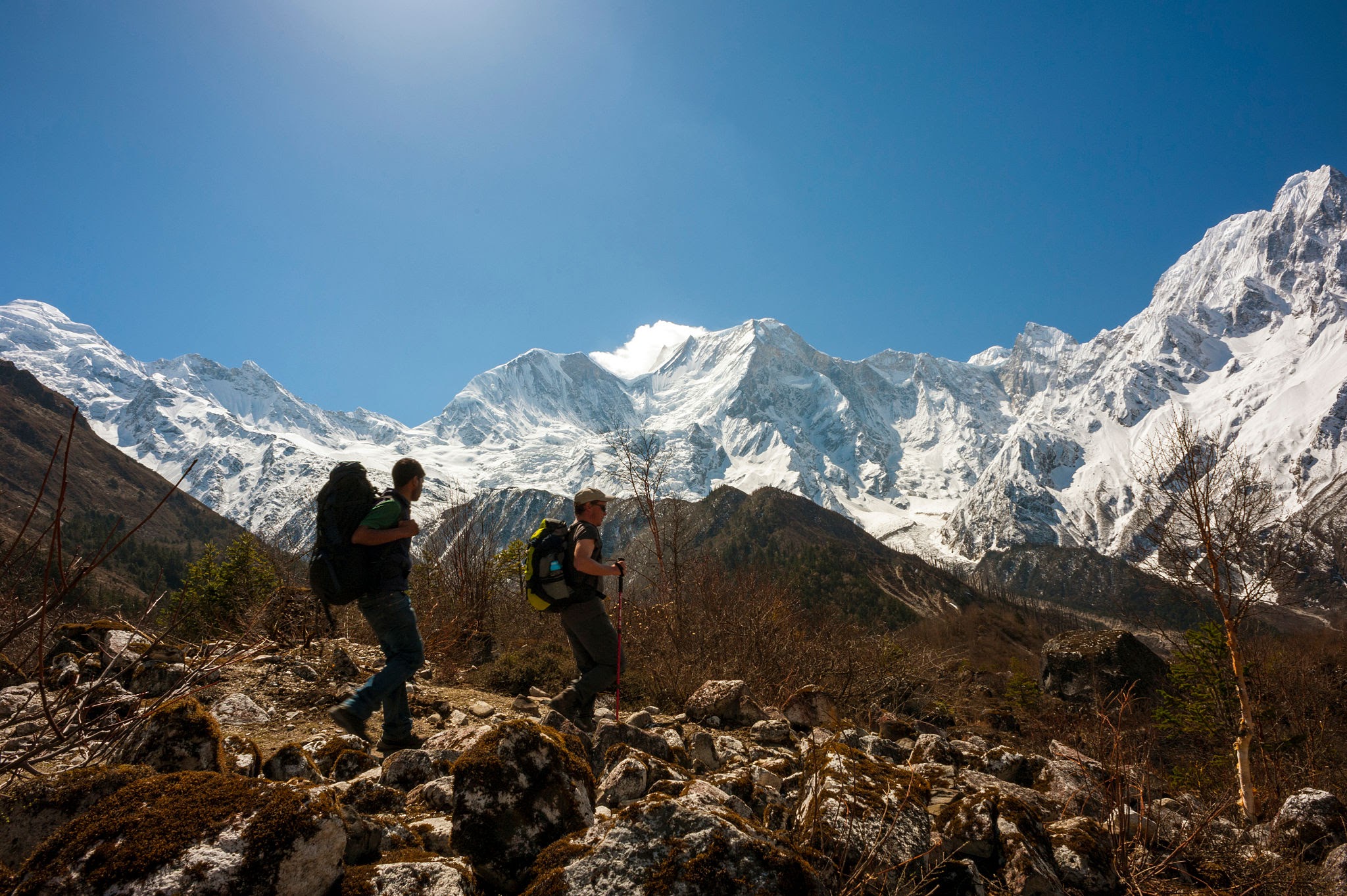
Mount Manaslu is the main mountain attraction, along with numerous surrounding peaks in the Manaslu Himalaya. The mountain views become particularly impressive around Samagaun, Samdo, and the upper sections of the circuit.
Samagaun is one of the most important villages and acclimatization stops on the Manaslu Circuit Trek. Surrounded by spectacular Himalayan scenery, it offers access to viewpoints, monasteries, glaciers, and the famous Manaslu mountain landscape.
Yes, most well-planned Manaslu Circuit itineraries include an acclimatization day, usually around Samagaun. Trekkers often take a short hike to a higher elevation and return to the village to help their bodies adjust to the altitude.
If you develop symptoms of altitude sickness, stop ascending and inform your guide immediately. Rest may help mild symptoms, but worsening headache, vomiting, confusion, breathing problems, or difficulty walking require urgent descent and medical attention.
Yes, the Manaslu Circuit Trek can be completed safely with proper preparation, acclimatization, experienced trekking support, and suitable equipment. However, altitude, weather, landslides, remote terrain, and changing trail conditions can create risks.
Most trekkers stay in teahouses and small mountain lodges along the Manaslu Circuit. Accommodation is generally simple, with basic rooms and shared facilities becoming more common at higher elevations.
Wi-Fi is available at some teahouses and villages but is not reliable throughout the entire Manaslu Circuit. Connectivity becomes more limited in remote areas, so trekkers should not depend on constant internet access.
Electricity is available in many villages, but charging facilities can be limited or unreliable at higher elevations. Carrying a power bank is a good idea for keeping your phone, camera, and other devices charged.
Teahouses on the Manaslu Circuit usually serve dal bhat, noodles, rice, pasta, potatoes, soups, eggs, momos, and other simple trekking meals. Dal bhat is particularly popular because it is filling and provides plenty of energy for long trekking days.
A porter is not mandatory, but hiring one can make the Manaslu Circuit Trek much more comfortable. A porter carries your main luggage, allowing you to hike with a lighter daypack and conserve energy for the higher sections.
You should pack trekking boots, warm layers, a down jacket, waterproof clothing, thermal wear, gloves, a hat, sunglasses, sunscreen, a sleeping bag, trekking poles, a headlamp, water bottles, a power bank, and basic first-aid supplies. Your packing list should also reflect the trekking season.
Yes, a warm sleeping bag is highly recommended for the Manaslu Circuit Trek. Nights can become extremely cold at higher elevations, and a good sleeping bag provides extra warmth even when blankets are available in teahouses.
Yes, you can usually charge your phone and camera batteries at many teahouses, although charging may cost extra. Because electricity is less reliable at higher elevations, carrying a power bank and spare batteries is recommended.
The Manaslu Circuit Trek is generally considered more remote and challenging than the Annapurna Circuit Trek. Manaslu has fewer facilities, more rugged sections, and a strong wilderness feel, while Annapurna has better-developed infrastructure and easier road access.
Yes, the Manaslu Circuit Trek can be combined with the Tsum Valley Trek. Adding Tsum Valley extends the itinerary but allows trekkers to explore remote villages, Buddhist monasteries, traditional culture, and a less-traveled Himalayan valley.
You should choose the Manaslu Circuit Trek if you want a remote Himalayan adventure combining dramatic mountain scenery, traditional villages, Tibetan-influenced culture, and the challenging Larkya La Pass. It offers a quieter and more wilderness-focused experience than Nepal's most established trekking routes.