Packing for the Manaslu Circuit Trek can feel a little confusing, especially if this is your first high-altitude trek in Nepal. The trail takes you from lower green valleys and traditional villages to the challenging Larkya La Pass at around 5,106 meters, so you need to prepare for changing weather, cold temperatures, long walking days, and basic teahouse conditions.
The good news is that you do not need to carry your entire wardrobe. A smart, lightweight, and practical Manaslu Circuit Trek packing list is much better than an overloaded backpack.
This guide covers everything you need, from clothing and trekking shoes to sleeping bags, personal items, electronics, and important documents.
What to Pack for the Manaslu Circuit Trek
The ideal packing strategy is to carry only what you will actually use. Most trekkers use a duffel bag for the main gear and a small daypack for daily essentials.
Your exact packing list can vary depending on the season, trek duration, and whether you use a porter. However, the following items are suitable for most Manaslu Circuit Trek itineraries.
1. Backpack and Duffel Bag
You normally need two bags for the trek:
Duffel bag: A 50–70 liter duffel bag is ideal for your main trekking equipment. If you are traveling with a trekking agency, a duffel bag may be provided.
Daypack: A comfortable 25–35 liter backpack is enough for items you need during the day.
Your daypack should have:
- Rain cover
- Comfortable shoulder straps
- Hip belt
- Water bottle pockets
- Separate compartments
- Good back ventilation
Keep important items such as your passport, money, phone, camera, water, snacks, sunscreen, and extra layers in your daypack.
2. Trekking Clothing
The Manaslu region has dramatically different temperatures depending on altitude. Instead of packing heavy clothes, use a layering system.
Base Layers
Bring at least:
- 2 thermal tops
- 2 thermal bottoms
- 3–4 quick-dry T-shirts
- 2 pairs of trekking underwear
- 3–4 pairs of hiking socks
Merino wool or synthetic fabrics are excellent because they dry quickly and manage moisture better than cotton.
Avoid cotton for trekking because it becomes uncomfortable when wet and takes a long time to dry.
Mid Layers
A fleece jacket is one of the most useful items on the Manaslu Circuit. It provides warmth without taking up too much space.
Pack:
- 1 fleece jacket
- 1 lightweight insulated jacket
- 1 warm down jacket
A down jacket becomes particularly important at higher elevations, especially around Samdo, Dharmasala, and Larkya La.
Outer Layers
Weather in the Himalayas can change quickly. Your outer layer should protect you from wind and rain.
Pack:
- Waterproof jacket
- Waterproof trekking pants
- Windproof jacket or shell
- Lightweight rain pants
A good waterproof jacket can be useful even outside the monsoon season because afternoon rain or snow can occur at higher elevations.
3. Trekking Pants and Shorts
Two or three pairs of trekking pants are usually enough.
Choose lightweight, comfortable, quick-drying pants with good mobility.
You can also bring:
- 1 pair of hiking shorts
- 1 pair of comfortable trousers for evenings
- 1 pair of thermal leggings
You probably will not need jeans during the trek. They are heavy, take a long time to dry, and are not comfortable for long walking days.
4. Trekking Boots
Good trekking boots are one of the most important items on your Manaslu Circuit Trek packing list.
Choose boots that are:
- Comfortable
- Waterproof
- Well broken-in
- Suitable for rocky terrain
- Supportive around the ankles
- Compatible with thick trekking socks
Do not bring brand-new boots directly onto the trail. Wear them for several walks before your trek to avoid blisters and foot pain.
For Larkya La Pass, good traction becomes especially important if there is snow or ice on the trail.
You may also bring lightweight camp shoes or sandals for use inside teahouses.
5. Socks
Cold and wet feet can make a trekking day miserable.
Pack around 4–5 pairs of good-quality trekking socks. Wool or synthetic hiking socks are preferable to ordinary cotton socks.
A useful combination is:
- 3–4 pairs of hiking socks
- 1–2 pairs of warm socks for higher elevations
Keep one dry pair specifically for sleeping.
6. Sleeping Bag
A warm sleeping bag is highly recommended for the Manaslu Circuit Trek.
Teahouses provide blankets, but temperatures can become very cold at higher elevations. A four-season sleeping bag rated for cold Himalayan conditions is a good choice.
If you do not want to purchase one, sleeping bags can often be rented in Kathmandu.
A sleeping bag liner is also useful because it adds warmth and keeps your sleeping bag cleaner.
7. Trekking Poles
Trekking poles can make a significant difference on the Manaslu Circuit.
They are especially helpful on:
- Long descents
- Steep climbs
- Rocky trails
- Uneven terrain
- Snow-covered sections
- The approach to Larkya La Pass
Adjustable trekking poles are convenient because you can shorten them when they are not needed.
8. Headlamp
A headlamp should always be part of your trekking gear.
It is useful for:
- Early morning starts
- Walking to bathrooms at night
- Power cuts
- Starting the trek before sunrise
- Crossing high passes in low light
Bring extra batteries or a rechargeable headlamp with a power bank.
9. Water and Hydration Equipment
Staying hydrated is extremely important at high altitude.
Bring:
- 1 reusable water bottle
- 1 water bladder
- Water purification tablets
- UV water purifier, if preferred
A 2–3 liter total water capacity is generally practical for a trekking day, although your exact requirement depends on the weather and availability of water along the trail.
Avoid relying entirely on bottled water. Reusable bottles and purification methods are more environmentally friendly and practical.
10. Sun Protection
The sun can be surprisingly strong at high altitude.
Your Manaslu Circuit packing list should include:
- SPF 50+ sunscreen
- Lip balm with SPF
- Sunglasses with UV protection
- Sun hat
- Buff or neck gaiter
- Lightweight scarf
Good sunglasses are particularly important when walking on snow around Larkya La Pass because reflected sunlight can be intense.
11. Gloves and Warm Accessories
Your hands, head, and neck can lose heat quickly at higher elevations.
Pack:
- Lightweight liner gloves
- Warm insulated gloves
- Warm hat or beanie
- Buff
- Neck warmer
- Sun hat
Having both lightweight and insulated gloves allows you to adjust according to the temperature.
12. Personal Hygiene Items
Teahouse facilities become more basic as you go higher, so carry your own basic hygiene products.
Recommended items include:
- Toothbrush
- Toothpaste
- Biodegradable soap
- Hand sanitizer
- Quick-dry towel
- Toilet paper
- Wet wipes
- Small shampoo
- Lip balm
- Deodorant
- Small nail clipper
- Personal hygiene products
Keep these items in a waterproof bag.
Wet wipes can be particularly useful on days when a proper shower is unavailable.
13. First Aid and Personal Medication
A small personal first-aid kit is worth carrying.
Consider packing:
- Blister treatment
- Adhesive bandages
- Gauze
- Antiseptic wipes
- Pain reliever
- Elastic bandage
- Personal prescription medication
- Basic cold and stomach medication
- Oral rehydration salts
Do not rely completely on finding specific medicines along the trail. Carry the medication you regularly need from Kathmandu.
If you are trekking at high altitude, discuss altitude-related medication and prevention with a qualified medical professional before your trip.
14. Electronics and Charging
Electricity is available in many Manaslu teahouses, but charging facilities can be limited, especially at higher elevations.
Pack:
- Smartphone
- Charging cable
- Power bank
- Universal travel adapter
- Camera
- Extra camera batteries
- Headlamp
A 10,000–20,000 mAh power bank can be useful for keeping your phone and other devices charged.
Keep electronics inside waterproof bags to protect them from rain and moisture.
15. Documents and Money
Keep your important documents in a waterproof pouch.
You should carry:
- Passport
- Trekking permits
- Travel insurance documents
- Emergency contact details
- Copies of important documents
- Some Nepalese cash
There are limited ATM facilities along the Manaslu Circuit, so carry enough cash from Kathmandu for your personal expenses.
It is also wise to keep some emergency cash separately from your main wallet.
16. Snacks for the Trail
Food is available at teahouses, but snacks are useful during long walking days.
Good options include:
- Energy bars
- Chocolate
- Nuts
- Dried fruit
- Trail mix
- Biscuits
- Electrolyte powder
Choose lightweight, high-energy snacks that are easy to carry.
17. Waterproof and Dry Bags
Weather can change quickly in the mountains, so protecting your equipment from moisture is important.
Use:
- Waterproof backpack cover
- Dry bags
- Waterproof document pouch
- Small plastic or reusable bags
- Zip-lock bags
Pack clothing in separate waterproof bags inside your duffel. This makes it easier to organize your gear and protects your clothes if your bag gets wet.
18. Optional Items
Some items are not essential but can make your trek more comfortable.
Consider:
- Camera
- Book or e-reader
- Small binoculars
- Travel pillow
- Earplugs
- Small sewing kit
- Multi-purpose tool
- Journal and pen
- Microfiber towel
- Playing cards
Do not overpack optional items. Every extra kilogram becomes noticeable after several days of walking.
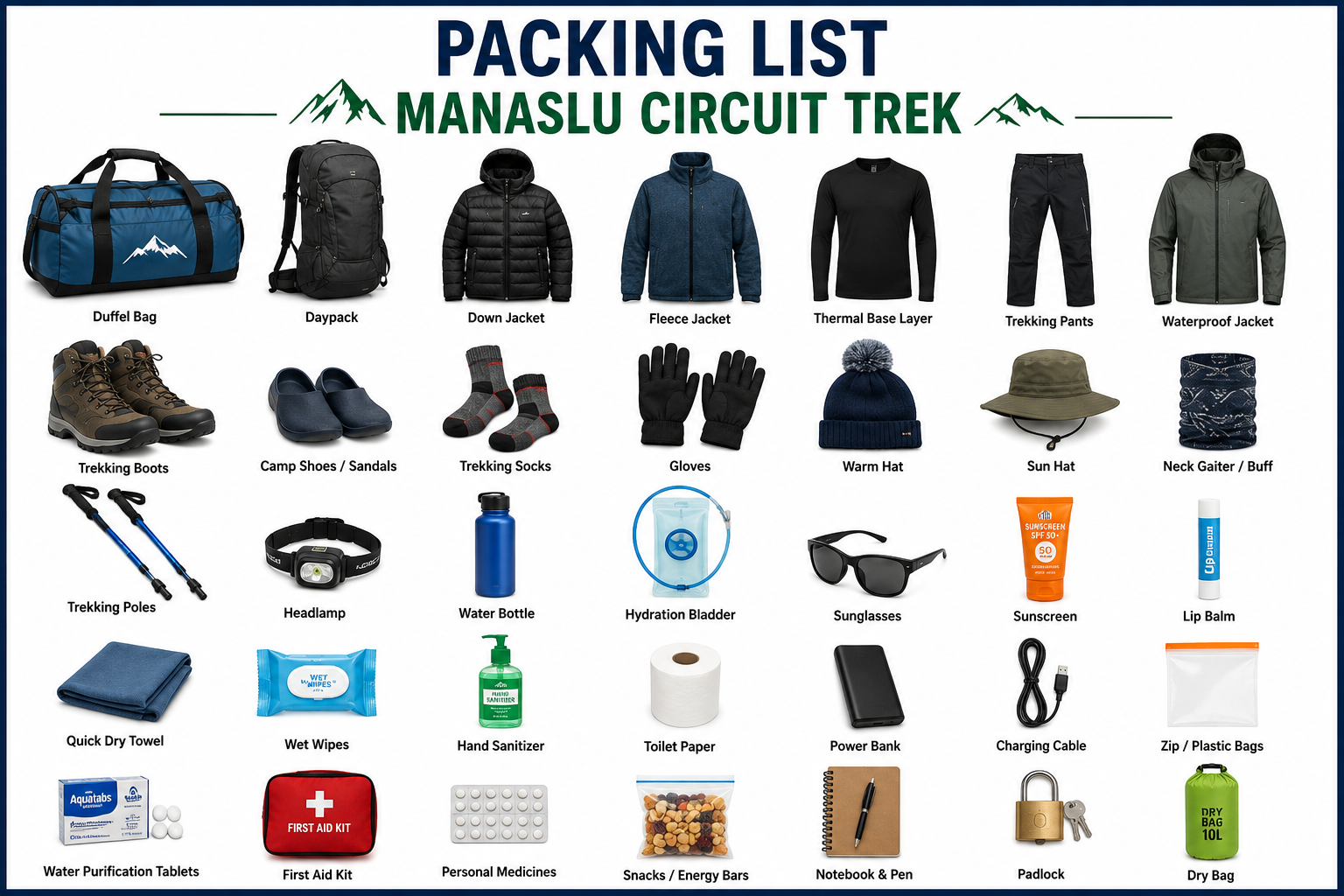
Manaslu Circuit Trek Packing List by Category
For a quick overview, here is a practical checklist:
Clothing
-
-
2 thermal tops
-
2 thermal bottoms
-
-
-
-
-
-
-
4–5 pairs of trekking socks
-
-
-
-
-
-
Trekking Gear
Personal Items
-
-
-
-
Toothbrush and toothpaste
-
-
-
-
-
-
Electronics
Documents
-
-
-
-
-
-
Copies of important documents
Manaslu Circuit Packing List for Different Seasons
Your packing list should change slightly depending on when you trek.
Spring: March to May
Spring brings relatively stable weather and warmer temperatures in the lower valleys.
Bring lightweight layers, but do not leave your warm gear at home. Nights at higher elevations remain cold.
Autumn: September to November
Autumn is one of the most popular periods for the Manaslu Circuit Trek.
Clear mountain views and generally stable conditions make it excellent for trekking. Bring a warm down jacket, fleece, gloves, and proper cold-weather gear for the higher sections.
Winter: December to February
Winter requires significantly more preparation.
Expect very cold temperatures and possible snow, particularly around higher sections and Larkya La. You may need heavier insulation, warmer gloves, additional thermal layers, and appropriate winter trekking equipment.
Always check current trail and weather conditions before departure.
Monsoon: June to August
The monsoon season brings rain, slippery trails, mud, and possible landslides in some areas.
If trekking during this period, waterproof equipment becomes especially important. A waterproof backpack cover, rain jacket, rain pants, and dry bags should be priorities.
How Heavy Should Your Backpack Be?
One of the biggest mistakes trekkers make is carrying too much.
If you have a porter, keep your main duffel organized and carry only daily necessities in your daypack. If you are trekking independently, aim to keep your backpack as light as reasonably possible.
A practical rule is:
Pack for the conditions, not for every possible situation.
You do not need multiple pairs of heavy shoes, large bottles of toiletries, excessive clothing, or unnecessary gadgets.
What Not to Pack for the Manaslu Circuit Trek
Avoid carrying:
- Heavy jeans
- Multiple pairs of shoes
- Large towels
- Excessive toiletries
- Too many books
- Heavy electronics
- Unnecessary cooking equipment
- Cotton-heavy clothing
- Large bottles of shampoo
- Excessive food
The lighter your load, the more enjoyable your trek will be.
Final Tips for Packing for Manaslu Circuit Trek
Before leaving Kathmandu, check your entire gear setup. Wear your trekking boots, test your backpack, and make sure your rain cover fits properly.
Keep frequently used items where you can easily reach them. Your water bottle, snacks, sunscreen, gloves, rain jacket, and camera should not be buried at the bottom of your bag.
Most importantly, prepare for changing conditions. The Manaslu Circuit Trek takes you through several climate zones, and conditions can be very different between the lower valleys and the high mountains.
A carefully prepared Manaslu Circuit Trek packing list should balance warmth, comfort, safety, and weight. You do not need expensive equipment for everything, but investing in reliable boots, a warm sleeping bag, waterproof layers, and good-quality trekking clothing can make a huge difference.
With the right preparation, you can spend less time worrying about your gear and more time enjoying the spectacular Himalayan scenery, traditional villages, Buddhist culture, dramatic valleys, and the unforgettable crossing of Larkya La Pass.